
Blue Cheese
Blue cheese is a generic term used to describe cheese produced with cow's milk, sheep's milk, or goat's milk and ripened with cultures of the mold Penicillium. The final product is characterized by green, grey, blue or black veins or spots of mold throughout the body. This process also softens the texture and develops the distinctive sharp flavour.
The flavour of the cheese depends on the type of blue cheese, shape, size, climate of the curing and the length of ageing. But it generally tends to be sharp and salty. Some of the famous blue cheeses around the world are Roquefort from France, Gorgonzola from Italy and Stilton from England.The origin of Blue cheese has an interesting story. It is thought to have been invented by accident when a drunken cheese maker left behind a half-eaten loaf of bread in moist cheese caves. When he returned back, he discovered that the mold covering the bread had transformed it into a blue cheese.
Blue cheese tastes best when served with crackers, pears, raisins, fruit breads and walnuts. Crumble the cheese and melt it into sour cream, plain yogurt or mayonnaise as a dressing.
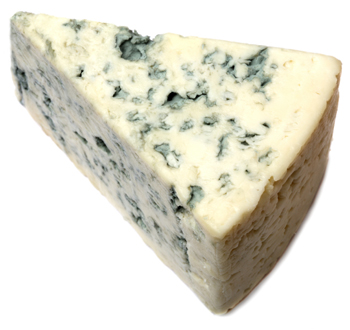
- Made from pasteurized or unpasteurized cow's, goat's or sheep's milk
- Country of origin:countries of the world
- Type: semi soft, blue-veined
- Texture: creamy
- Colour: blue
- Flavour: salty, sharp, tangy

No comments:
Post a Comment